French social etiquette is more formal than many visitors expect — but it's not complicated. The rules are simple, consistent, and widely followed. Master a few basics and you'll be treated with the warmth and generosity for which the French are (genuinely) known.
| Tipping Summary | Detail |
|---|---|
| Restaurants: Service included by law (15%). Rounding up or leaving €1–5 for good service is appreciated. | |
| Cafés: Round up to the nearest euro (e.g., €3.50 → €4) | |
| Taxis: Round up or add €1–2 | |
| Hotels: €1–2/bag for porters; €1–5/day for housekeeping in high-end hotels | |
| Tour guides: €5–10 for a half-day tour; €10–20 for a full day | |
| Hairdressers: €2–5 |
Tipping
Restaurants
French law requires that service compris (service included) — a 15% service charge is included in all menu prices. You are never obligated to tip beyond this. However, leaving a small additional tip for genuinely good service is appreciated:
- Casual meal: round up or leave the small change
- Good bistro meal: €2–5
- Fine dining: 5–10% of the total
- Never feel pressured. The service charge is already in the bill.
Cafés
Round up. If your coffee costs €2.50, leave €3. If your bill is €12, leave €13. That's it.
Taxis
Round up to the nearest euro, or add €1–2 for helpful drivers (loading luggage, long journeys). Tips are not expected but always welcome.
Greeting Etiquette
Bonjour is Mandatory
Say Bonjour (Hello) when entering any shop, café, restaurant, or service establishment. Say Au revoir (Goodbye) or Bonne journée (Have a nice day) when leaving. This is the single most important social rule in France. Skipping it is considered genuinely rude.
La Bise (Cheek Kissing)
The bise (cheek kiss) — light air-kisses on alternating cheeks — is the standard greeting between friends, acquaintances, and relatives. The number of kisses varies by region (two in most of France; three in Provence; four in parts of the north). As a tourist, a handshake is always appropriate. If a French person initiates la bise, follow their lead.
Vous vs. Tu
Use vous (formal you) (formal) with strangers, service staff, elders, and professional contacts. Switch to tu (informal you) (informal) only when invited or among friends of the same age. When in doubt, use vous.
Dining Etiquette
At a Restaurant
- Wait to be seated. Don't sit yourself unless it's clearly a casual café.
- Bread goes on the table — not on a side plate. This isn't rude; it's French.
- Wine is poured by the host or the person who ordered — don't pour your own from a shared bottle.
- Hands on the table — resting wrists on the table edge is proper; hands in your lap is considered strange.
- Don't ask to split the bill — it's considered gauche. One person pays, or you take turns across meals.
- Eating pace: Meals are leisurely. Lunch is 1–2 hours. Dinner even longer. The waiter won't rush you — but equally, won't bring the bill until you ask: L'addition, s'il vous plaît (The bill, please).
- Don't ask for substitutions — French chefs prepare dishes as intended. Dietary needs should be mentioned upfront; preferences are less welcome.
Coffee
The default café (coffee) in France is an espresso. If you want a large milky coffee, ask for a café crème (coffee with cream) or café au lait (coffee with milk). Coffee comes after dessert, never during the meal. Ordering a cappuccino after lunch marks you as a tourist (though nobody will refuse to serve you one).
Dress Code
The French dress neatly. You don't need to be fashionable — but looking presentable shows respect. Practical advice:
- Restaurants: Smart casual minimum. No flip-flops, shorts, or athletic wear at sit-down restaurants.
- Churches: Cover shoulders and knees (especially at Notre-Dame, Sacré-Cœur, etc.).
- Beaches: Swimwear at the beach only — cover up for the walk to the café.
- General: Clean, well-fitting clothes in neutral colours will never look out of place.
Other Social Norms
- Queuing: The French queue, but less rigidly than the British. Don't be aggressive, but don't be surprised by some flexibility.
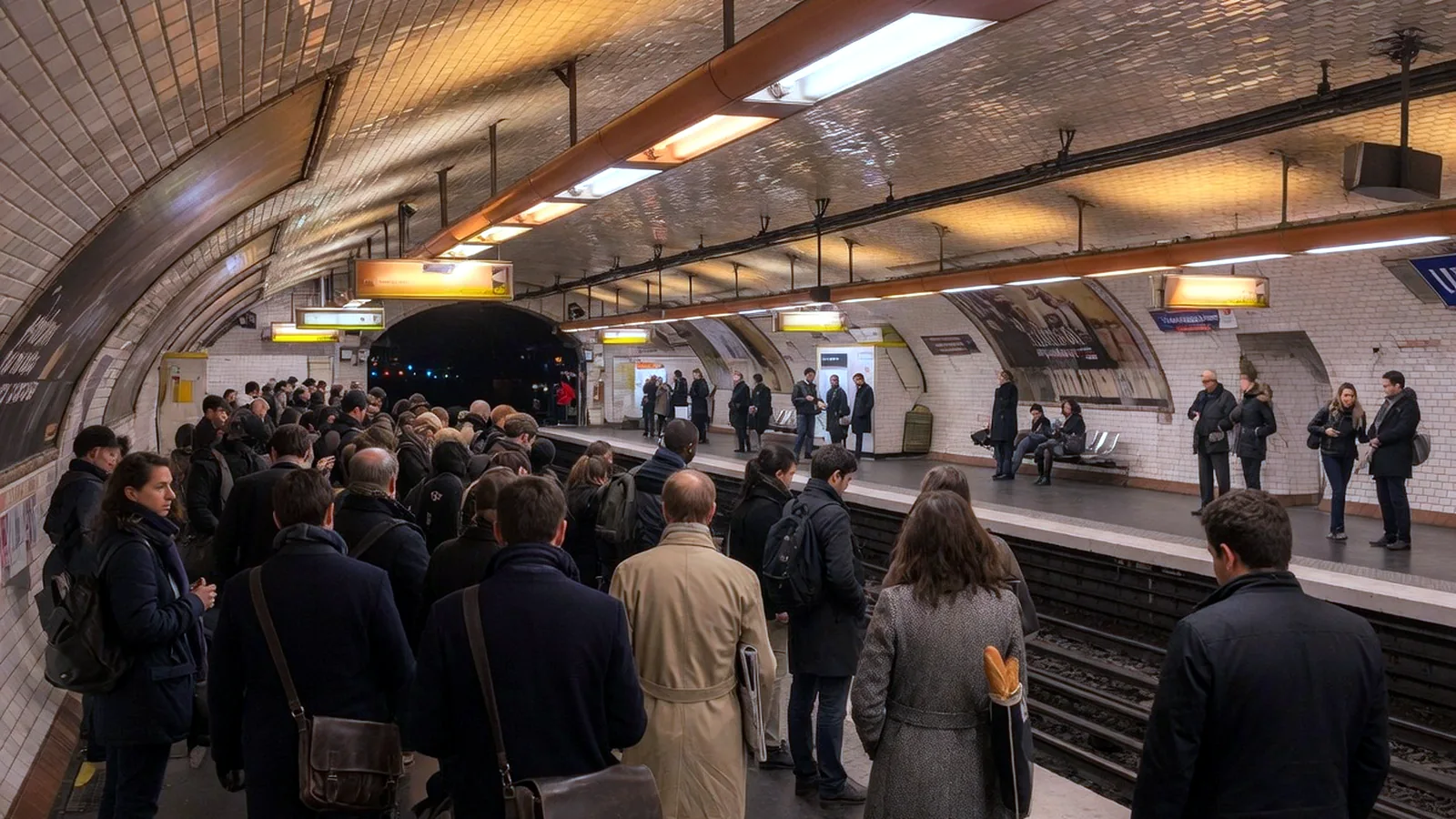
- Noise: Speaking loudly in public — especially on phones — is frowned upon. Indoor voices are expected in restaurants and on public transport.
- Personal space: Closer than Anglo-Saxon norms but not as close as Mediterranean. Follow cues.
- Showing up on time: For dinner invitations, 15 minutes late is politely expected (le quart d'heure de politesse (the polite quarter-hour)). For restaurants and business, be on time.
On the ground
| Pin | Working note |
|---|---|
| Page | Tipping and Etiquette in France |
| Desk | La Porte |
| First use | Read the pins, then one related page — not five |
| Confirm | Official site or ticket desk the week you go |
If another France InfoBuffoon guide owns the beat — a park gate, a museum Tuesday, a wine list — we send you there instead of duplicating a thinner copy here. Tipping and Etiquette in France sits in a country that is easy to over-plan and easy to under-prepare. The practical layer is where visitors collect names. This page is the opposite: what to do first, what to skip, and which sibling guide holds the rest.
France rewards a slow unit. One arrondissement, one valley, one appellation, one park trail. The photograph of five landmarks in five days is a real holiday, and it is also a queue with a passport. If you only have three nights, spend two of them in the same bed. The third night is for a train, not a third hotel.
Working a visit
Practical France is sockets (Type E/F, 230 V), tap water that is safe, pharmacies that are the real clinic for minor trouble, and a lunch hour that still closes a village. Cards work in cities. Cash still opens some park kiosks, some island boats, and some market stalls that have never seen contactless. A lightweight adapter belongs in the personal item, not the hold.
We will not write as if every reader is on a gap year, or as if every reader is in a palace hotel. We will not flatten 'the south' into one climate. We will not treat a strike day, a jour férié, or a Tuesday museum closure as a personality quirk of the French. They are calendars. Check them. Then use Tipping and Etiquette in France as a pin, not as scripture.
Cross the five guides instead of cloning them. La Porte holds trains and the first week. La Terre holds weather and park gates. L'Esprit holds museum Tuesdays and the Revolution. La Table holds the market morning and the wine list. Le Moteur holds the Tour, the working week, and why August is empty in Paris and full on the coast.