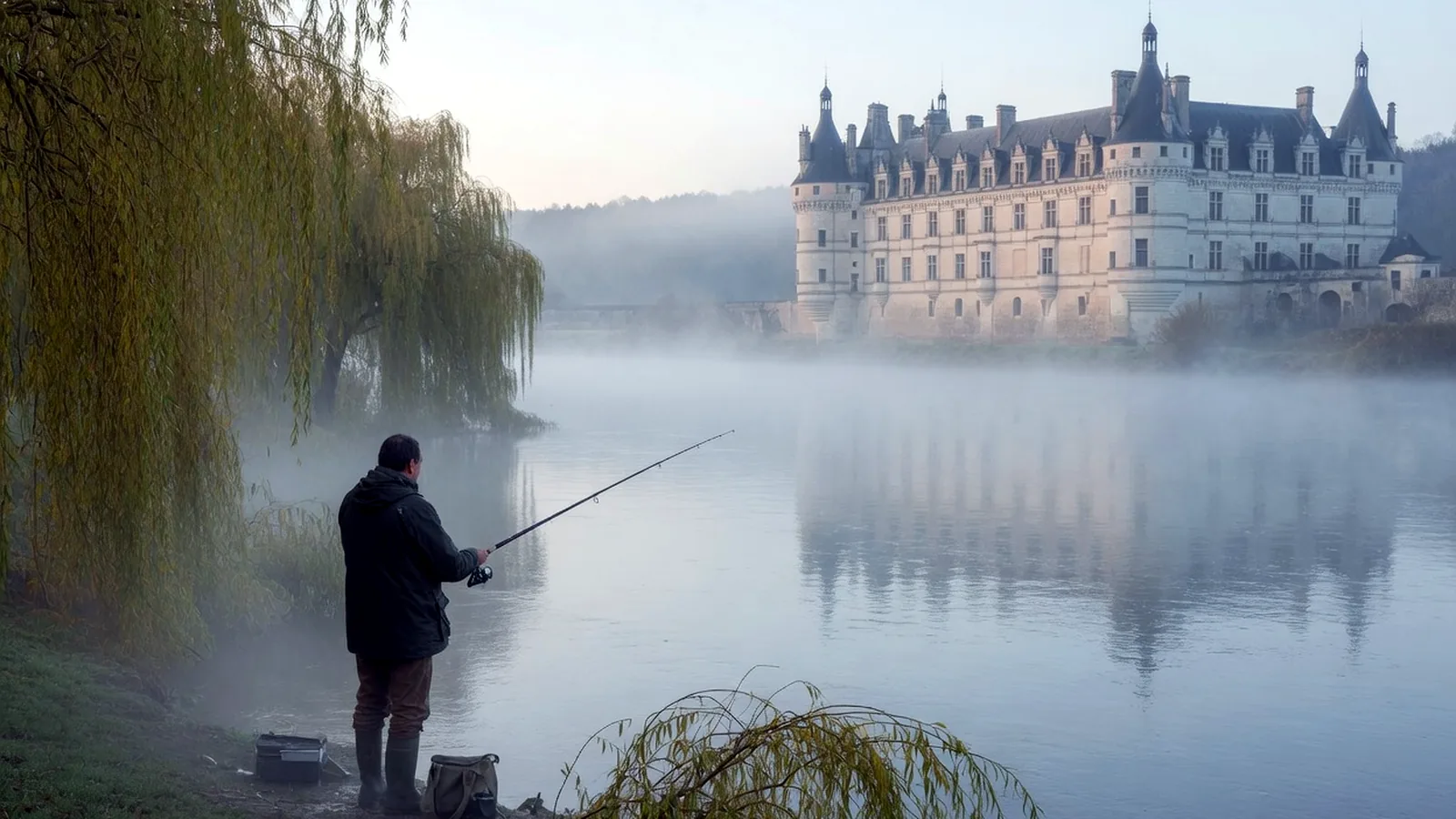
The Loire Valley is the Garden of France — a gentle, fertile landscape of vineyards, sunflower fields, and river meadows, punctuated by over 300 châteaux ranging from medieval fortresses to extravagant Renaissance palaces. This route follows the Loire and its tributaries through the heartland of French château country, linking the most spectacular properties in a circuit that can be driven in 3–5 days.
| Loire Valley Châteaux Route Quick Facts | Detail |
|---|---|
| Distance: ~300 km (Orléans to Saumur, Loire-side route) | |
| Driving time: 5 hours (non-stop); 3–5 days recommended | |
| Châteaux visited: 10+ major, dozens of minor properties | |
| UNESCO Status: Loire Valley inscribed as World Heritage "Cultural Landscape" (2000) | |
| Base towns: Tours, Amboise, Blois — all well-connected by train | |
| Season: April–October; many châteaux have reduced winter hours |
The Route
- Orléans (0 km)The route starts in Joan of Arc's city — the cathedral, the medieval quarter, and the excellent Musée des Beaux-Arts set the tone.
- Château de Chambord (60 km)The superlative — the largest château in the Loire, with 440 rooms, a famous double-helix staircase (attributed to Leonardo da Vinci's influence), and a 5,440-hectare estate. France's most visited château after Versailles.
- Château de Cheverny (80 km)The most elegantly furnished — still privately owned and lived in. Hergé based Marlinspike Hall (Tintin's home) on its façade. The interior is opulent and impeccably maintained.
- Blois (90 km)The Château Royal de Blois showcases four architectural styles across four wings — Gothic, Flamboyant Gothic, Renaissance, and Classical. The nightly Son et Lumière on the façade is superb.
- Château de Chaumont-sur-Loire (110 km)Perched above the river — part medieval fortress, part Renaissance residence, now hosting an acclaimed annual International Garden Festival (April–November) in the grounds.
- Château d'Amboise (130 km)The royal residence that overlooks the Loire. Leonardo da Vinci spent his last years nearby (at Clos Lucé) and is buried in the château's Chapel of Saint-Hubert.
- Clos Lucé (132 km)Leonardo's final home — his workshop, bedroom, and scale models of his inventions. A pilgrimage for admirers of the Renaissance polymath.
- Château de Chenonceau (150 km)The most graceful of all — an arched gallery spanning the River Cher, reflected perfectly in the water. Known as the "Château des Dames" for the succession of remarkable women who shaped it.
- Tours (180 km)The ideal base — a lively university city with half-timbered squares, the cathedral, and excellent restaurants. TGV to Paris in 1 hour.
- Château de Villandry (195 km)Famous for its extraordinary Renaissance gardens — ornamental, water, and potager (kitchen) gardens in formal geometric patterns.
- Château d'Azay-le-Rideau (210 km)Set on an island in the Indre river — a jewel of early French Renaissance architecture. Balzac called it "a faceted diamond set in the Indre."
- Château de Chinon (250 km)A medieval fortress where Joan of Arc recognised the Dauphin. More austere than the Renaissance show-palaces, more atmospheric.
- Abbaye de Fontevraud (270 km)A vast medieval abbey — burial place of Henry II of England, Eleanor of Aquitaine, and Richard the Lionheart.
- Saumur (300 km)A handsome town topped by a fairytale château reflected in the Loire. Famous for sparkling wine (Saumur Brut) and the Cadre Noir equestrian academy.
Renaissance France — François I, Leonardo, and the cultural revolution that built the Loire châteaux — on L'Esprit.
By Bike
The Loire à Vélo is an 800 km signed cycle route along the river — flat, scenic, and perfectly suited to château-hopping. Bike hire available in all major towns.
Practical Tips
- Combination tickets save money at clustered châteaux (e.g., Chambord + Cheverny)
- Arrive early — Chenonceau and Chambord get very crowded by 11 AM in summer
- Son et Lumière events at Chambord, Blois, and Chenonceau are worth an evening visit
On the ground
| Pin | Working note |
|---|---|
| Route | Loire Valley Châteaux Route |
| Péage | Budget the tolls; they are not a surprise |
| Cols | Mountain dates are not ring-road dates |
| Train alternative | Often exists for part of the corridor |
Loire Valley Châteaux Route is a working page on La Porte, not a souvenir. Use it with the week you travel. Loire Valley Châteaux Route sits in a country that is easy to over-plan and easy to under-prepare. The routes layer is where visitors collect names. This page is the opposite: what to do first, what to skip, and which sibling guide holds the rest.
France rewards a slow unit. One arrondissement, one valley, one appellation, one park trail. The photograph of five landmarks in five days is a real holiday, and it is also a queue with a passport. If you only have three nights, spend two of them in the same bed. The third night is for a train, not a third hotel.
Working a visit
Practical France is sockets (Type E/F, 230 V), tap water that is safe, pharmacies that are the real clinic for minor trouble, and a lunch hour that still closes a village. Cards work in cities. Cash still opens some park kiosks, some island boats, and some market stalls that have never seen contactless. A lightweight adapter belongs in the personal item, not the hold.
We will not write as if every reader is on a gap year, or as if every reader is in a palace hotel. We will not flatten 'the south' into one climate. We will not treat a strike day, a jour férié, or a Tuesday museum closure as a personality quirk of the French. They are calendars. Check them. Then use Loire Valley Châteaux Route as a pin, not as scripture.
Cross the five guides instead of cloning them. La Porte holds trains and the first week. La Terre holds weather and park gates. L'Esprit holds museum Tuesdays and the Revolution. La Table holds the market morning and the wine list. Le Moteur holds the Tour, the working week, and why August is empty in Paris and full on the coast.