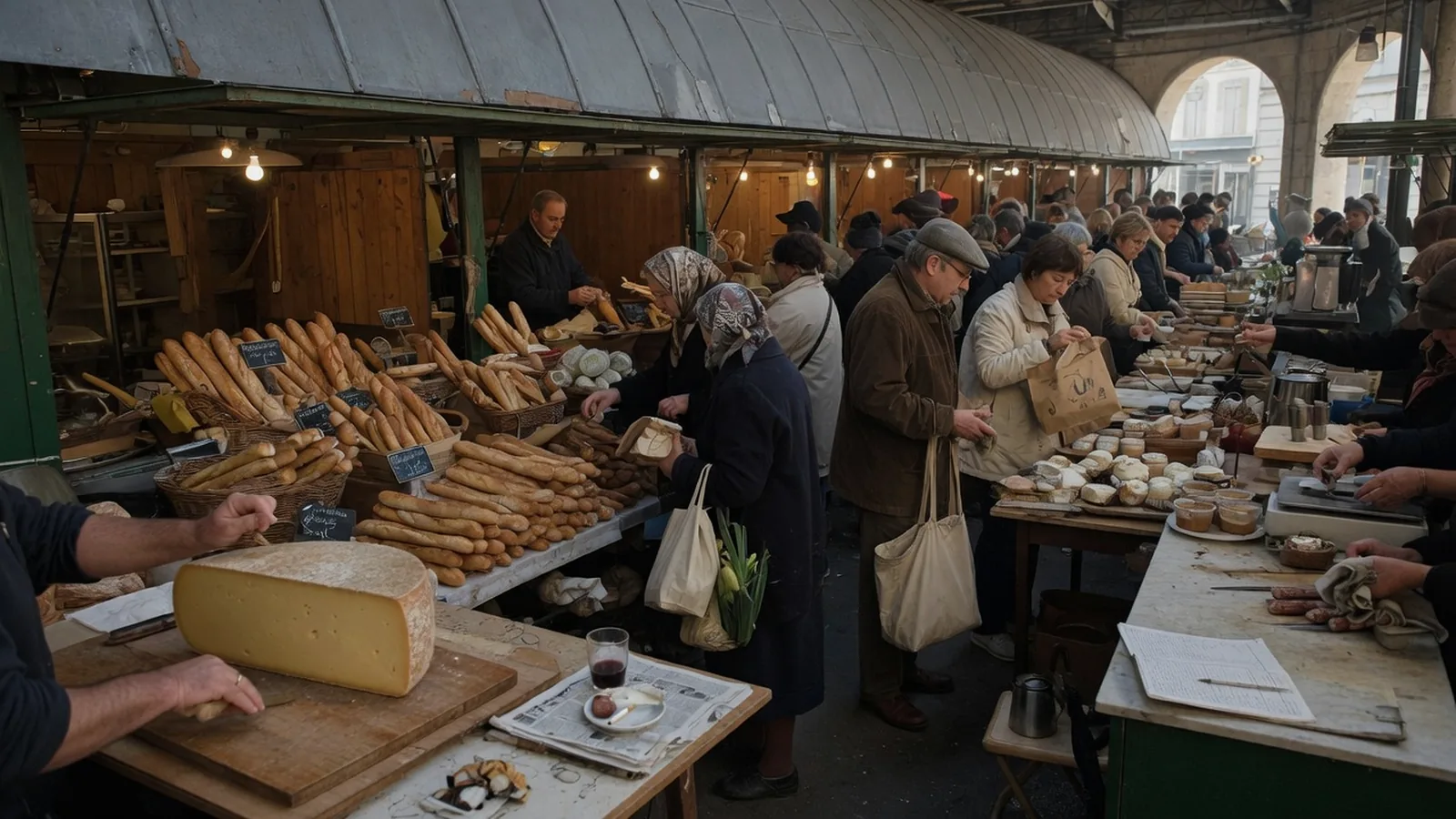
Driving in France ranges from sublime (Route des Grandes Alpes, Provence lavender roads, Brittany coast) to stressful (the Paris Périphérique at rush hour). The motorway network is excellent but expensive — tolls add up. Rural France, however, is a driver's paradise: quiet départementales (departmental roads) through vineyards, mountains, and medieval villages.
| Driving Essentials | Detail |
|---|---|
| Drive on: The right (priority from the right unless signed otherwise) | |
| Minimum age: 18 | |
| Licence: EU licences valid; UK/US/AU need an International Driving Permit (recommended) | |
| Speed cameras: Widespread and enforced — fines are heavy | |
| Breathalyser: Legally required to carry one (rarely enforced, but €11 fine) | |
| Hi-vis vest: One per occupant, in the passenger compartment (not the boot) | |
| Warning triangle: Compulsory |


Speed Limits
| Road Type | Dry Weather | Rain / Wet |
|---|---|---|
| Motorway (autoroute (motorway)) | 130 km/h | 110 km/h |
| Dual carriageway | 110 km/h | 100 km/h |
| Single carriageway | 80 km/h | 80 km/h |
| Urban areas | 50 km/h | 50 km/h |
| Some city centres | 30 km/h | 30 km/h |
New drivers (licence held < 3 years): subtract 10–20 km/h from motorway and dual carriageway limits.
Toll Roads (Péage)
French motorways are mostly privately operated and charge tolls. Costs are significant:
- Paris to Lyon (~460 km): ~€35
- Paris to Marseille (~770 km): ~€60
- Paris to Bordeaux (~580 km): ~€50
Payment: Cash, credit card, or télépéage (electronic toll tag) (Liber-t badge for faster passage). Rental cars sometimes include a toll tag — check when booking.
Toll-free alternatives: The routes nationales (national roads) (N-roads) and départementales (departmental roads) (D-roads) are free but slower. For scenic drives, they're often more rewarding than the motorway.
Fuel
- Sans plomb 95 (Unleaded 95) and Sans plomb 98 (Unleaded 98)
- Gazole (Diesel) — still common but increasingly expensive
- Supermarket fuel stations (Carrefour, Leclerc, Intermarché) are the cheapest — often €0.10–0.15/L less than motorway stations
- Electric vehicle charging: expanding rapidly via Ionity, TotalEnergies, Tesla Superchargers
Parking
- Stationnement payant (Paid parking) is the norm in cities
- Blue zones require a parking disc (free, timed)
- Underground car parks in city centres: expect €15–25/day in Paris, €8–15 elsewhere
- In small towns: free parking is usually available on the outskirts
Priority from the Right (Priorité à droite (priority from the right))
The most confusing French driving rule: unless otherwise signed, traffic joining from the right has priority — even from small side roads. In practice, most main roads are signed with priority (yellow diamond sign), but in villages and unmarked intersections, yield to the right. Roundabouts give priority to traffic already in the circle.
Paris Driving
Don't. Unless absolutely necessary, avoid driving in Paris. The traffic is intense, parking is expensive, and the public transport is excellent. If you must drive, beware the Crit'Air vignette — an emissions sticker required for driving in low-emission zones (Paris, Lyon, Marseille, Strasbourg, and others). Order at certificat-air.gouv.fr before your trip.
Rental Cars
- Major firms (Hertz, Avis, Europcar, Sixt) at all airports and major stations
- Manual transmission is cheaper and more common than automatic — specify when booking
- CDW (Collision Damage Waiver) excess can be high (€800–2,000); consider excess insurance
- Check whether the car includes a toll tag (télépéage)
On the ground
| Pin | Working note |
|---|---|
| Page | Driving in France |
| Desk | La Porte |
| First use | Read the pins, then one related page — not five |
| Confirm | Official site or ticket desk the week you go |
The useful unit is one place or one question, not a fourteen-day montage of France. Driving in France sits in a country that is easy to over-plan and easy to under-prepare. The travel layer is where visitors collect names. This page is the opposite: what to do first, what to skip, and which sibling guide holds the rest.
France rewards a slow unit. One arrondissement, one valley, one appellation, one park trail. The photograph of five landmarks in five days is a real holiday, and it is also a queue with a passport. If you only have three nights, spend two of them in the same bed. The third night is for a train, not a third hotel.
Working a visit
Practical France is sockets (Type E/F, 230 V), tap water that is safe, pharmacies that are the real clinic for minor trouble, and a lunch hour that still closes a village. Cards work in cities. Cash still opens some park kiosks, some island boats, and some market stalls that have never seen contactless. A lightweight adapter belongs in the personal item, not the hold.
We will not write as if every reader is on a gap year, or as if every reader is in a palace hotel. We will not flatten 'the south' into one climate. We will not treat a strike day, a jour férié, or a Tuesday museum closure as a personality quirk of the French. They are calendars. Check them. Then use Driving in France as a pin, not as scripture.
Cross the five guides instead of cloning them. La Porte holds trains and the first week. La Terre holds weather and park gates. L'Esprit holds museum Tuesdays and the Revolution. La Table holds the market morning and the wine list. Le Moteur holds the Tour, the working week, and why August is empty in Paris and full on the coast.