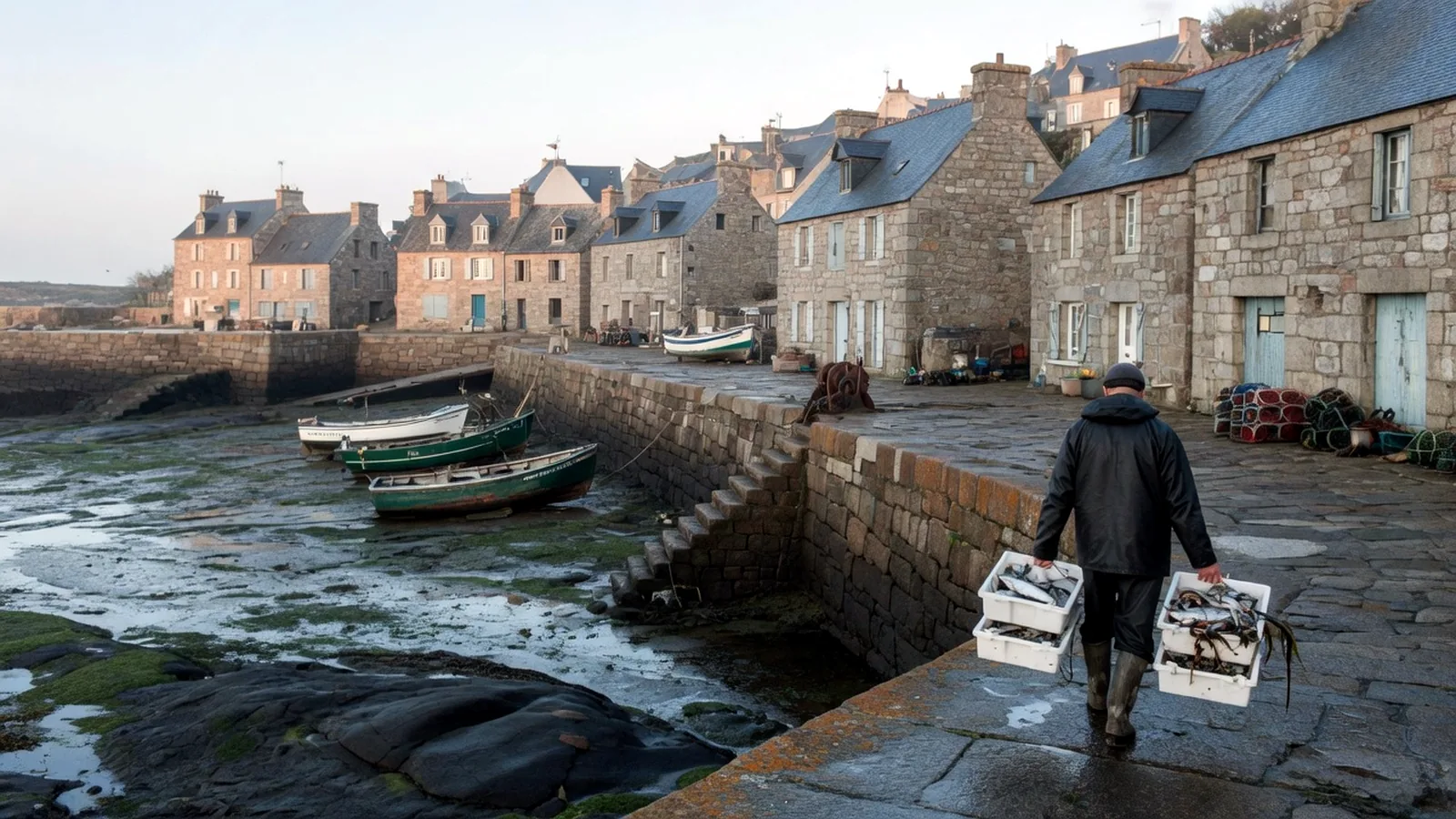
The French approach to dressing — understated, well-fitted, neutral palette — is worth adopting for practical as much as aesthetic reasons. Pack less than you think you need. France has excellent pharmacies, supermarkets, and shopping everywhere, so anything forgotten can be replaced. What matters is dressing appropriately for your destination and season.
| Packing Essentials | Detail |
|---|---|
| Adaptor: Type C and Type E plugs (two round pins), 230V/50Hz | |
| Comfortable walking shoes: Cobblestones are everywhere | |
| Light layers: Weather changes; even summer evenings cool down | |
| Small day bag: For markets, day trips, and museum visits | |
| Reusable water bottle: Tap water is safe and excellent throughout France |

Clothing by Season
Spring (April – June)
- Light layers — long-sleeve shirts, cardigans, a light jacket
- One warmer layer for cooler evenings and northern regions
- Waterproof jacket or compact umbrella (April showers are real)
- Comfortable walking shoes with grip (wet cobblestones)
- Sunglasses and sunscreen (UV is strong from May)
Summer (July – August)
- Breathable fabrics — linen and cotton
- Sun hat and high-SPF sunscreen (Provence and Riviera hit 35°C+)
- Swimwear (if heading to coast, lakes, or hotel pools)
- Light cardigan for air-conditioned museums and restaurants
- Evening wear: smart casual — no flip-flops at restaurants
Autumn (September – October)
- Similar to spring: layers, light jacket, one warm sweater
- Scarf (very French, very practical)
- Good walking shoes for vineyard visits and leaf-covered trails
- Rain jacket
Winter (November – March)
- Warm coat, scarf, gloves, hat
- Thermal layers for markets and outdoor activities
- Waterproof boots (especially for northern and Alpine regions)
- Ski gear if heading to the Alps (or rent at resort — often easier)
Documents and Essentials
- Passport: Valid for at least 3 months beyond planned departure (for non-EU visitors)
- ETIAS: EU travel authorisation required from 2025 for visa-exempt nationalities (US, UK, AU, CA, etc.)
- Travel insurance: Highly recommended — European Health Insurance Card (EHIC) for EU citizens
- Driving licence + IDP: If driving (International Driving Permit recommended for non-EU licences)
- Crit'Air sticker: If driving into low-emission zones (order in advance)
- Digital copies: Photos of passport, insurance, hotel confirmations on your phone
Electronics
- EU plug adaptor (Type C/E) — bring 2 if travelling with multiple devices
- Portable charger — long sightseeing days drain phones quickly
- Phone: Check roaming charges; EU roaming is free for EU residents; others may need a local SIM
- Translation app: Google Translate with offline French pack downloaded
What NOT to Pack
- Excess clothing: French pharmacies and shops carry everything. If you forget toothpaste, you'll find a pharmacie (pharmacy) (green cross sign) within minutes.
- Formal wear: Unless attending a Michelin-star dinner, smart casual covers every situation
- Too many shoes: Two pairs maximum — one walking, one evening
- Bulky guidebooks: Use your phone. Carry one compact guide at most.
On the ground
| Pin | Working note |
|---|---|
| Page | Packing Guide for France |
| Desk | La Porte |
| First use | Read the pins, then one related page — not five |
| Confirm | Official site or ticket desk the week you go |
If another France InfoBuffoon guide owns the beat — a park gate, a museum Tuesday, a wine list — we send you there instead of duplicating a thinner copy here. Packing Guide for France sits in a country that is easy to over-plan and easy to under-prepare. The travel layer is where visitors collect names. This page is the opposite: what to do first, what to skip, and which sibling guide holds the rest.
France rewards a slow unit. One arrondissement, one valley, one appellation, one park trail. The photograph of five landmarks in five days is a real holiday, and it is also a queue with a passport. If you only have three nights, spend two of them in the same bed. The third night is for a train, not a third hotel.
Working a visit
Practical France is sockets (Type E/F, 230 V), tap water that is safe, pharmacies that are the real clinic for minor trouble, and a lunch hour that still closes a village. Cards work in cities. Cash still opens some park kiosks, some island boats, and some market stalls that have never seen contactless. A lightweight adapter belongs in the personal item, not the hold.
We will not write as if every reader is on a gap year, or as if every reader is in a palace hotel. We will not flatten 'the south' into one climate. We will not treat a strike day, a jour férié, or a Tuesday museum closure as a personality quirk of the French. They are calendars. Check them. Then use Packing Guide for France as a pin, not as scripture.
Cross the five guides instead of cloning them. La Porte holds trains and the first week. La Terre holds weather and park gates. L'Esprit holds museum Tuesdays and the Revolution. La Table holds the market morning and the wine list. Le Moteur holds the Tour, the working week, and why August is empty in Paris and full on the coast.
Across the five guides
On the ground
| Pin | Working note |
|---|---|
| Page | Packing Guide for France |
| Desk | La Porte |
| First use | Read the pins, then one related page — not five |
| Confirm | Official site or ticket desk the week you go |
If another France InfoBuffoon guide owns the beat — a park gate, a museum Tuesday, a wine list — we send you there instead of duplicating a thinner copy here. Packing Guide for France sits in a country that is easy to over-plan and easy to under-prepare. The travel layer is where visitors collect names. This page is the opposite: what to do first, what to skip, and which sibling guide holds the rest.
France rewards a slow unit. One arrondissement, one valley, one appellation, one park trail. The photograph of five landmarks in five days is a real holiday, and it is also a queue with a passport. If you only have three nights, spend two of them in the same bed. The third night is for a train, not a third hotel.
Working a visit
Practical France is sockets (Type E/F, 230 V), tap water that is safe, pharmacies that are the real clinic for minor trouble, and a lunch hour that still closes a village. Cards work in cities. Cash still opens some park kiosks, some island boats, and some market stalls that have never seen contactless. A lightweight adapter belongs in the personal item, not the hold.
We will not write as if every reader is on a gap year, or as if every reader is in a palace hotel. We will not flatten 'the south' into one climate. We will not treat a strike day, a jour férié, or a Tuesday museum closure as a personality quirk of the French. They are calendars. Check them. Then use Packing Guide for France as a pin, not as scripture.
Cross the five guides instead of cloning them. La Porte holds trains and the first week. La Terre holds weather and park gates. L'Esprit holds museum Tuesdays and the Revolution. La Table holds the market morning and the wine list. Le Moteur holds the Tour, the working week, and why August is empty in Paris and full on the coast.