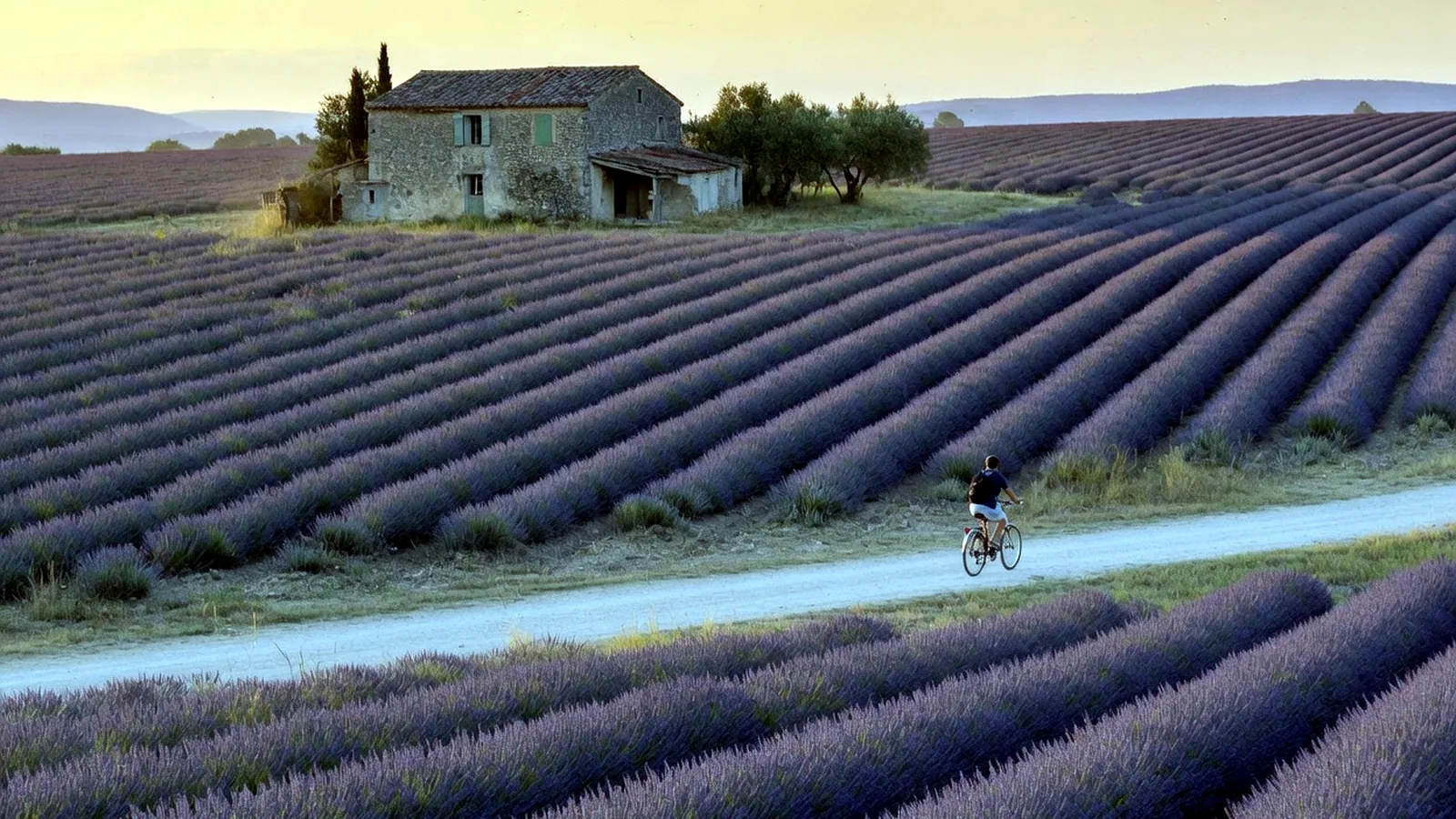
The Route Napoléon traces the path Napoleon Bonaparte took in March 1815, after escaping exile on Elba and marching north to reclaim his throne — a journey of audacious ambition through some of the most spectacular scenery in southern France. The modern road (N85) runs 325 km from Golfe-Juan on the Côte d'Azur to Grenoble in the Alps, climbing from Mediterranean palms to Alpine peaks.
| Route Napoléon Quick Facts | Detail |
|---|---|
| Distance: 325 km (Golfe-Juan to Grenoble) | |
| Driving time: 5–6 hours (non-stop); 2–3 days recommended | |
| Elevation: Sea level to 1,248 m (Col Bayard) | |
| Road: N85 — well-maintained, generally two lanes, some mountain passes | |
| Direction: South to north (following Napoleon's march) or reverse | |
| Season: Year-round; mountain passes may be snowy December–March |
The Route
- Golfe-Juan (0 km)Napoleon landed here on 1 March 1815 with 1,000 soldiers. A column marks the spot on the beach. The Riviera sparkles.
- Grasse (20 km)The perfume capital of the world. Visit Fragonard, Molinard, or Galimard perfumeries. Napoleon passed through at night to avoid hostile royalist crowds.
- Castellane (85 km)The gateway to the Gorges du Verdon — Europe's Grand Canyon. The town sits beneath a dramatic cliff topped by a chapel.
- Digne-les-Bains (150 km)A spa town and lavender centre in the Haute-Provence hills. The Geological Reserve nearby has 300-million-year-old fossils.
- Sisteron (190 km)"The Gateway to Provence" — a dramatic narrow gorge where the citadel fortress clings to a cliff above the Durance river. Napoleon passed through unimpeded, calling it "the most dangerous point on my route."
- Gap (235 km)The capital of the Hautes-Alpes, a sunny market town at 735 m. Napoleon received his first warm welcome here — the garrison joined him.
- Col Bayard (250 km)The highest point on the route at 1,248 m — panoramic Alpine views.
- Corps (265 km)A small mountain town where Napoleon spent his last night before Grenoble. Lake Sautet, turquoise and surrounded by peaks, is nearby.
- La Mure (290 km)The start of the descent to Grenoble. The Chemin de Fer de la Mure — a historic railway along a cliff face — is a famous scenic ride.
- Grenoble (325 km)Napoleon's triumphant arrival. The garrison sent to stop him switched sides, and he marched into Grenoble to cheers. The Bastille fortress above the city (reachable by cable car) offers a fitting final panorama.
Napoleon Bonaparte — The full story of Napoleon's rise, exile, return, and legacy — on L'Esprit.
Practical Information
- Fuel: Fill up in Grasse, Castellane, Digne, and Gap — stations can be sparse in the mountain sections
- Accommodation: Castellane and Sisteron make ideal overnight stops; Gap has the widest hotel selection
- Detour: The Gorges du Verdon (from Castellane) adds half a day but is one of France's greatest natural wonders
- Season: Spring wildflowers and autumn colours are spectacular; summer can be hot at lower elevations; winter requires snow chains for the high passes
When to Drive
- May–June: Lavender starting, mountains snow-capped, roads clear
- September–October: Golden light, quieter roads, harvest season
On the ground
| Pin | Working note |
|---|---|
| Route | Route Napoléon |
| Péage | Budget the tolls; they are not a surprise |
| Cols | Mountain dates are not ring-road dates |
| Train alternative | Often exists for part of the corridor |
Hours, fares, and festival weeks move. A 2024 caption is not a 2026 desk. Route Napoléon sits in a country that is easy to over-plan and easy to under-prepare. The routes layer is where visitors collect names. This page is the opposite: what to do first, what to skip, and which sibling guide holds the rest.
France rewards a slow unit. One arrondissement, one valley, one appellation, one park trail. The photograph of five landmarks in five days is a real holiday, and it is also a queue with a passport. If you only have three nights, spend two of them in the same bed. The third night is for a train, not a third hotel.
Working a visit
Practical France is sockets (Type E/F, 230 V), tap water that is safe, pharmacies that are the real clinic for minor trouble, and a lunch hour that still closes a village. Cards work in cities. Cash still opens some park kiosks, some island boats, and some market stalls that have never seen contactless. A lightweight adapter belongs in the personal item, not the hold.
We will not write as if every reader is on a gap year, or as if every reader is in a palace hotel. We will not flatten 'the south' into one climate. We will not treat a strike day, a jour férié, or a Tuesday museum closure as a personality quirk of the French. They are calendars. Check them. Then use Route Napoléon as a pin, not as scripture.
Cross the five guides instead of cloning them. La Porte holds trains and the first week. La Terre holds weather and park gates. L'Esprit holds museum Tuesdays and the Revolution. La Table holds the market morning and the wine list. Le Moteur holds the Tour, the working week, and why August is empty in Paris and full on the coast.
Across the five guides
- La Terre — Landscapes, parks, and seasons
- L'Esprit — History, arts, and landmarks
- La Table — Food, wine, and the meal
- Le Moteur — Economy, sport, and work
On the ground
| Pin | Working note |
|---|---|
| Route | Route Napoléon |
| Péage | Budget the tolls; they are not a surprise |
| Cols | Mountain dates are not ring-road dates |
| Train alternative | Often exists for part of the corridor |
Hours, fares, and festival weeks move. A 2024 caption is not a 2026 desk. Route Napoléon sits in a country that is easy to over-plan and easy to under-prepare. The routes layer is where visitors collect names. This page is the opposite: what to do first, what to skip, and which sibling guide holds the rest.
France rewards a slow unit. One arrondissement, one valley, one appellation, one park trail. The photograph of five landmarks in five days is a real holiday, and it is also a queue with a passport. If you only have three nights, spend two of them in the same bed. The third night is for a train, not a third hotel.
Working a visit
Practical France is sockets (Type E/F, 230 V), tap water that is safe, pharmacies that are the real clinic for minor trouble, and a lunch hour that still closes a village. Cards work in cities. Cash still opens some park kiosks, some island boats, and some market stalls that have never seen contactless. A lightweight adapter belongs in the personal item, not the hold.
We will not write as if every reader is on a gap year, or as if every reader is in a palace hotel. We will not flatten 'the south' into one climate. We will not treat a strike day, a jour férié, or a Tuesday museum closure as a personality quirk of the French. They are calendars. Check them. Then use Route Napoléon as a pin, not as scripture.
Cross the five guides instead of cloning them. La Porte holds trains and the first week. La Terre holds weather and park gates. L'Esprit holds museum Tuesdays and the Revolution. La Table holds the market morning and the wine list. Le Moteur holds the Tour, the working week, and why August is empty in Paris and full on the coast.