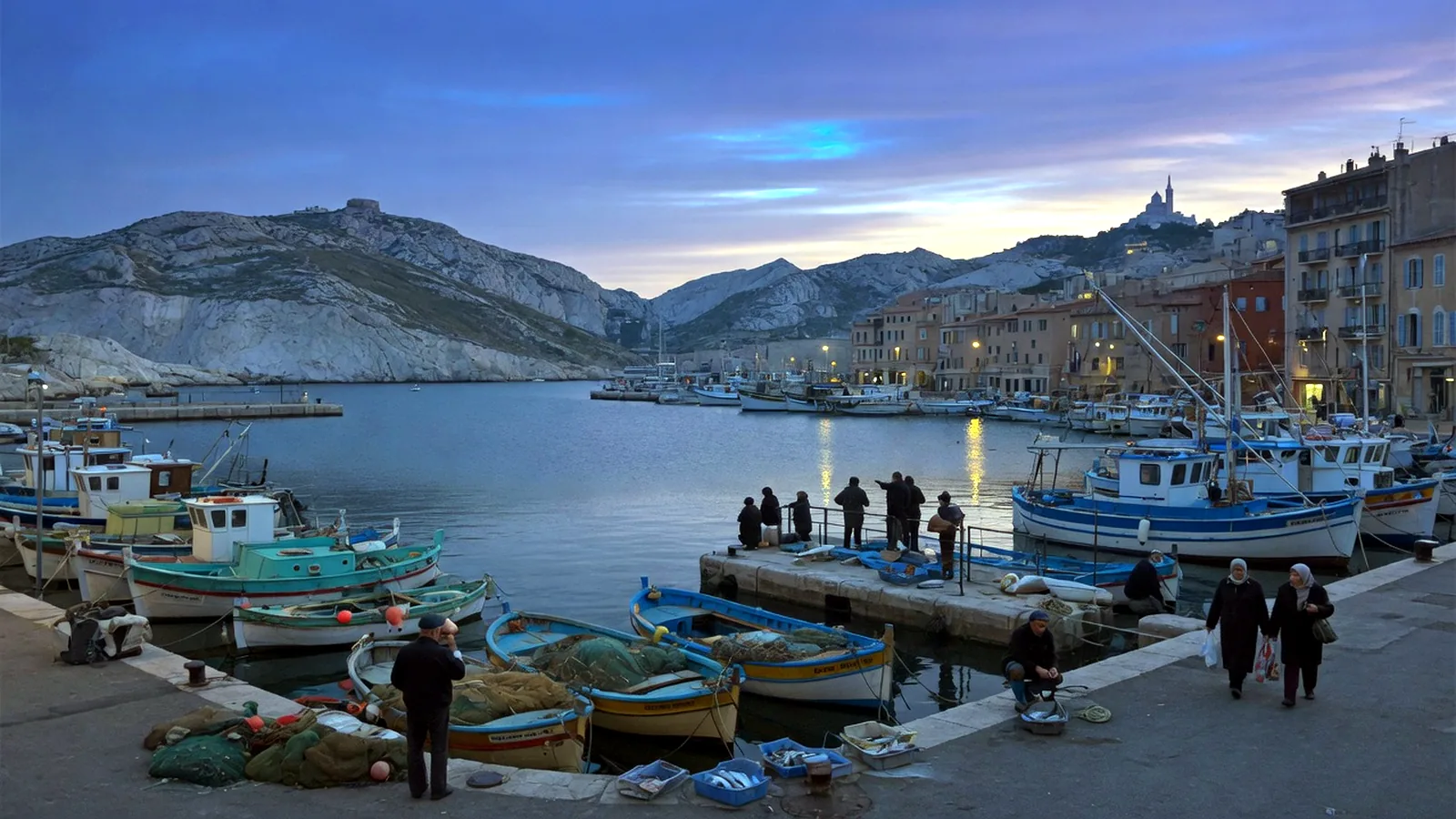
Lyon sits at the confluence of the Rhône and Saône rivers in southeast France, a city of 520,000 (1.7 million metro) that has been a crossroads of trade, silk, banking, and cuisine for two thousand years. If Paris is France's brain and heart, Lyon is its stomach. Paul Bocuse — the "Pope of French gastronomy" — made this his home, and the city's bouchons (traditional Lyonnaise restaurants) remain temples of honest, gutsy cooking that no food lover should miss.
But Lyon is far more than dinner. Its Renaissance old quarter, Vieux Lyon (Old Lyon), is a UNESCO World Heritage Site — one of Europe's largest Renaissance urban areas. Its traboules (secret passageways connecting buildings) wind through hidden courtyards. The Presqu'île peninsula between the two rivers is an elegant shopping and nightlife district, while the Confluence neighbourhood to the south represents one of Europe's most ambitious urban regeneration projects.
| Lyon Quick Facts | Detail |
|---|---|
| Population: 520,000 (city), 1.7 million (metro) | |
| Region: Auvergne-Rhône-Alpes | |
| Rivers: Rhône and Saône | |
| Founded: 43 BCE as Lugdunum (Roman capital of Gaul) | |
| Airport: Lyon-Saint Exupéry (LYS), 25 km east | |
| TGV from Paris: 2 hours | |
| UNESCO Status: Historic centre — World Heritage since 1998 | |
| Known for: Gastronomy, silk, Renaissance architecture, cinema |
Neighbourhoods
Vieux Lyon (Old Lyon)
The Renaissance heart of the city, nestled at the foot of Fourvière hill on the west bank of the Saône. Three districts — Saint-Jean, Saint-Paul, and Saint-Georges — are packed with Gothic and Renaissance buildings, traboules (covered passageways) (over 40 are open to the public), and the Cathédrale Saint-Jean-Baptiste with its 14th-century astronomical clock.
Must-see:
- Traboules — enter through unmarked doors to discover hidden Renaissance courtyards. The tourist office provides a map; key ones are at 54 Rue Saint-Jean and 27 Rue du Bœuf.
- Cathédrale Saint-Jean-Baptiste — Romanesque-Gothic cathedral with astronomical clock (shows at 12, 14, 15, 16h)
- Musée Gadagne — twin museums of Lyon's history and world puppetry, in a Renaissance mansion
Presqu'île
The peninsula between the Rhône and Saône is Lyon's commercial and social centre. Place Bellecour — one of Europe's largest open squares — anchors the southern end, while the grand Place des Terreaux (with Bartholdi's fountain and the Musée des Beaux-Arts) defines the north.
Must-see:
- Musée des Beaux-Arts — France's finest art museum outside Paris, in a former Benedictine abbey
- Rue de la République — the main shopping artery
- Place Bellecour — immense central square with views to Fourvière
Fourvière Hill
The "hill that prays" — crowned by the Basilique Notre-Dame de Fourvière, a flamboyantly ornate 19th-century church visible from across the city. The Roman theatre and Odeon below it date to 15 BCE, making this the oldest part of Lyon's 2,000-year history.
Must-see:
- Basilique de Fourvière — extraordinary gilded interior, rooftop tours available
- Théâtres Romains — the largest Roman theatre in France, still used for the summer Nuits de Fourvière festival
- Musée Gallo-Romain — embedded in the hillside, covering Lyon's Roman history
Roman Gaul — Lyon as Lugdunum — capital of Roman Gaul and one of the most important cities in the ancient world — on L'Esprit.
La Croix-Rousse
The "hill that works" — historically the silk-weaving district where canuts (silk workers) operated enormous Jacquard looms. Today it's bohemian and creative, with street art murals, independent boutiques, and one of Lyon's best daily markets.
Confluence
Lyon's most modern quarter, at the southern tip where the Rhône meets the Saône. The Musée des Confluences — a dramatic deconstructivist science museum — is the architectural centrepiece. Shopping, dining, and riverside walking complete the picture.
Food & Drink
Lyon's food culture is legendary. The city has more restaurants per capita than anywhere else in France, and the bouchon lyonnais (traditional Lyon bistro) is a protected culinary institution.
Classic Lyonnaise Dishes
- Quenelle de brochet (pike dumpling in crayfish sauce) — Lyon's signature dish
- Salade lyonnaise (frisée salad with bacon, croutons, and poached egg)
- Tablier de sapeur (breaded tripe) — "sapper's apron," an acquired taste that rewards the brave
- Cervelle de canut (silk worker's brains — actually herbed fromage blanc)
- Praline rose (pink praline) — the iconic Lyonnaise confection
Where to Eat
- Daniel & Denise — classic bouchon, Meilleur Ouvrier de France chef
- Les Halles de Lyon Paul Bocuse — the legendary covered market, 60+ food stalls
- Café Comptoir Abel — the oldest bouchon in Lyon (since 1928)
- Brasserie Georges — monumental 1836 brasserie with Art Deco interiors
Lyonnaise Cuisine — The complete guide to Lyon's culinary traditions — bouchons, Bocuse, and the capital of French gastronomy — on La Table.
Transport
Lyon is excellently connected:
- TGV from Paris: 2 hours (Gare de Lyon Part-Dieu)
- Metro: 4 lines — efficient and easy to navigate
- Vélo'v: Lyon's pioneering bike-share system (predated Paris's Vélib')
- Funicular: Two lines connect Vieux Lyon to Fourvière and Saint-Just
- Airport transfer: Rhônexpress tram to Part-Dieu (30 mins, €16.30)
When to Visit
- Spring (April–May): Perfect weather, Nuits Sonores music festival (May)
- Summer (June–August): Nuits de Fourvière festival (theatre, concerts in the Roman amphitheatre), but hot
- Autumn (September–October): Beaujolais Nouveau anticipation, golden light
- December: Fête des Lumières — Lyon's famous Festival of Lights (8 December and surrounding days), when the entire city is illuminated with spectacular light installations. Plan well ahead — this is Lyon's biggest event.
On the ground
| Pin | Working note |
|---|---|
| Place | Lyon City Guide |
| First night | Sleep near a station or Métro, not a pretty square with no trains after 22:00 |
| Day-trip trap | Adding a second city because the TGV looks short on a map |
| Meal | One proper lunch beats three museum cafés |
Hours, fares, and festival weeks move. A 2024 caption is not a 2026 desk. Lyon City Guide sits in a country that is easy to over-plan and easy to under-prepare. The cities layer is where visitors collect names. This page is the opposite: what to do first, what to skip, and which sibling guide holds the rest.
France rewards a slow unit. One arrondissement, one valley, one appellation, one park trail. The photograph of five landmarks in five days is a real holiday, and it is also a queue with a passport. If you only have three nights, spend two of them in the same bed. The third night is for a train, not a third hotel.
Working a visit
Practical France is sockets (Type E/F, 230 V), tap water that is safe, pharmacies that are the real clinic for minor trouble, and a lunch hour that still closes a village. Cards work in cities. Cash still opens some park kiosks, some island boats, and some market stalls that have never seen contactless. A lightweight adapter belongs in the personal item, not the hold.
We will not write as if every reader is on a gap year, or as if every reader is in a palace hotel. We will not flatten 'the south' into one climate. We will not treat a strike day, a jour férié, or a Tuesday museum closure as a personality quirk of the French. They are calendars. Check them. Then use Lyon City Guide as a pin, not as scripture.
Cross the five guides instead of cloning them. La Porte holds trains and the first week. La Terre holds weather and park gates. L'Esprit holds museum Tuesdays and the Revolution. La Table holds the market morning and the wine list. Le Moteur holds the Tour, the working week, and why August is empty in Paris and full on the coast.