Paris is the capital of France and one of the most visited cities in the world. With a population of 2.1 million within its compact 105 km² (12.3 million in the greater metropolitan area), it is the political, economic, and cultural heart of the nation. The Seine cuts through the city in a graceful arc, dividing it into the Rive Droite (Right Bank) (north) and Rive Gauche (Left Bank) (south) — a geographic and cultural divide that has defined Parisian identity for centuries.
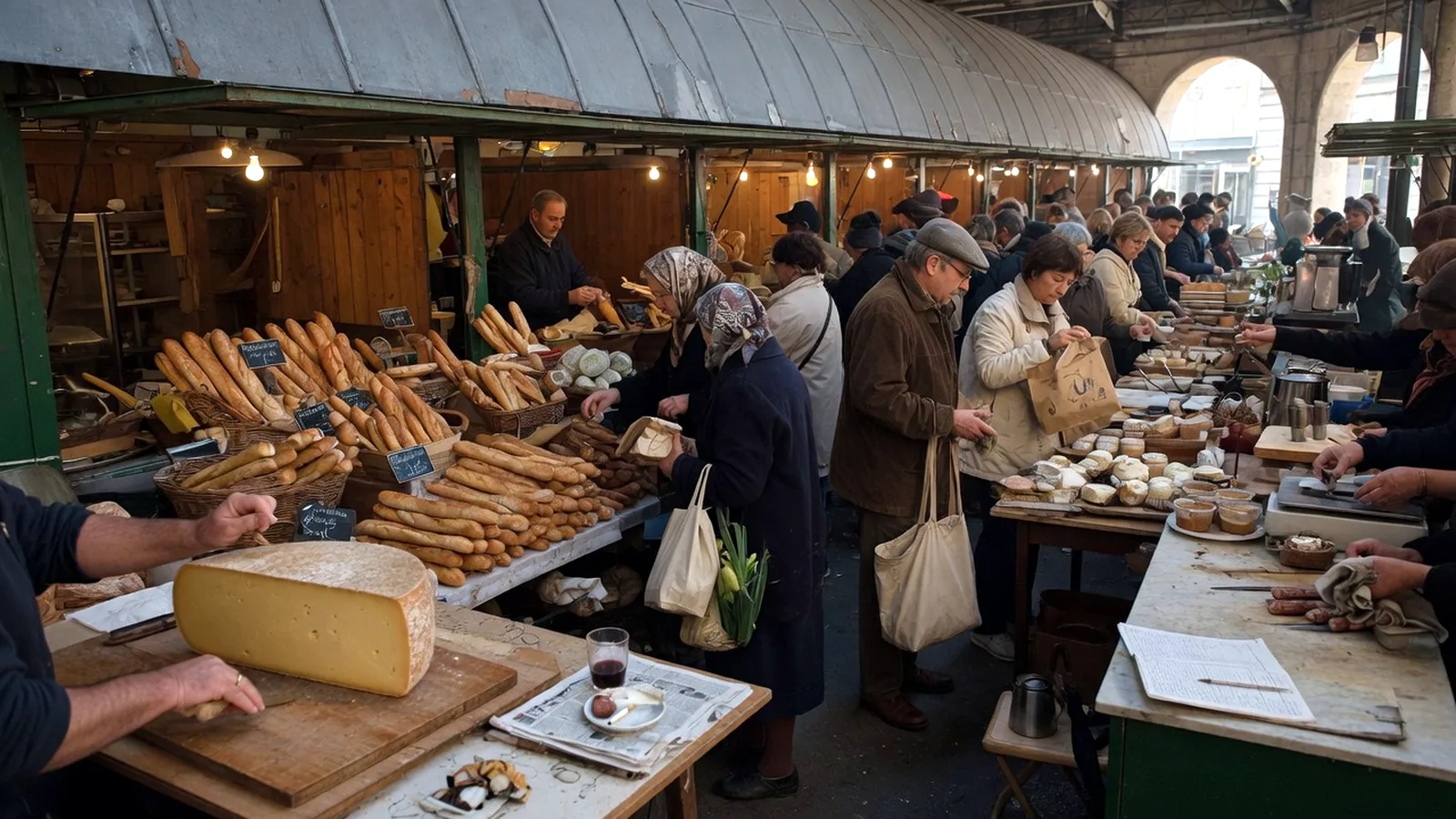
Paris is not just France's capital — it is one of the great cities of human civilisation. For a thousand years it has been a centre of art, philosophy, fashion, gastronomy, and revolution. The Eiffel Tower, the Louvre, Notre-Dame, the Champs-Élysées, Montmartre — these are not just landmarks, they are parts of the global imagination. But the Paris that rewards the most is the one beyond the postcards: the local marché (market) in the 11th, the hidden courtyard in the Marais, the canal-side apéro in the 10th, the neighbourhood boulangerie (bakery) whose croissants have been perfect since 1923.
| Paris Quick Facts | Detail |
|---|---|
| Population: 2.1 million (city), 12.3 million (metro) | |
| Founded: 3rd century BCE (Lutetia, Celtic settlement) | |
| Arrondissements: 20, spiralling clockwise from centre | |
| Airports: Charles de Gaulle (CDG), Orly (ORY), Beauvais (BVA) | |
| Public Transport: Métro (16 lines), RER (5 lines), bus, tram | |
| Average Temperature: 4°C (January), 25°C (July) | |
| UNESCO Status: Banks of the Seine — World Heritage since 1991 |

Understanding the Arrondissements
Paris is organised into 20 arrondissements (districts), numbered 1st to 20th in a clockwise spiral from the centre (like a snail shell — escargot (snail)). Each has its own character, mairie (town hall), and personality. Understanding the arrondissements is key to navigating Paris.
The Centre (1st–6th)
The historic heart. The 1st holds the Louvre and Tuileries. The 2nd and 3rd comprise the northern Marais. The 4th includes the Marais proper, Île de la Cité (Notre-Dame), and the Île Saint-Louis. The 5th is the Latin Quarter — the student district since the Middle Ages. The 6th is Saint-Germain-des-Prés — literary cafés, art galleries, and Luxembourg Gardens.
The Right Bank (7th–12th)
The 7th includes the Eiffel Tower, Musée d'Orsay, and the Hôtel des Invalides (military museum and Napoleon's tomb). The 8th is the Champs-Élysées, Arc de Triomphe, and grand Haussmann boulevards. The 9th holds the Opéra Garnier and department stores. The 10th centres on the Canal Saint-Martin — one of Paris's most vibrant young neighbourhoods. The 11th is Bastille and Oberkampf — nightlife central. The 12th includes the Bois de Vincennes and the Promenade Plantée (the original elevated park, before New York's High Line).
The Outer Ring (13th–20th)
The 13th is Chinatown and the striking Bibliothèque Nationale. The 14th is Montparnasse — once the haunt of Hemingway and Henry Miller. The 15th is residential and local. The 16th is wealthy, with Trocadéro views of the Eiffel Tower. The 17th ranges from bourgeois to bohemian around Batignolles. The 18th is Montmartre — Sacré-Cœur, artists' studios, and the Moulin Rouge. The 19th holds the Buttes-Chaumont park and La Villette cultural complex. The 20th is Belleville and Père-Lachaise cemetery — diverse, artistic, and increasingly the "real" Paris.
Neighbourhoods
Montmartre (18th)
The hilltop village within the city. Montmartre's winding streets, vine-covered houses, and Artist's Square (Place du Tertre (Tertre Square)) still evoke the bohemian Paris of Toulouse-Lautrec, Picasso, and Renoir. Crowned by the white dome of the Basilique du Sacré-Cœur, it offers the finest panoramic views of the city.
Must-see:
- Sacré-Cœur — the white Romano-Byzantine basilica, with views stretching to the horizon
- Place du Tertre — artists painting portraits, as they have for 150 years
- Moulin Rouge — the legendary cabaret (booking essential)
- Musée de Montmartre — Renoir's studio, the history of the neighbourhood
- Rue Lepic — the market street, Van Gogh's apartment, Café des 2 Moulins (from Amélie)
Le Marais (3rd–4th)
The Marais is Paris at its most seductively walkable — medieval lanes lined with hôtels particuliers (grand private mansions) now housing galleries, boutiques, and museums. It's the heart of Paris's Jewish community (Rue des Rosiers — the best falafel in the city) and its LGBTQ+ scene. On Sundays, when most of Paris is closed, the Marais is alive.
Must-see:
- Place des Vosges — Paris's oldest planned square (1612), with arcaded galleries
- Musée Picasso — housed in a 17th-century mansion
- Rue des Rosiers — the Jewish quarter, L'As du Fallafel
- Musée Carnavalet — the free museum of Paris's own history
- Centre Pompidou — modern art in the iconic inside-out building (technically Beaubourg, bordering the Marais)
Saint-Germain-des-Prés (6th)
The intellectual heart of Paris. This is where Sartre and de Beauvoir held court at Café de Flore, where Hemingway wrote at La Closerie des Lilas, and where the existentialist movement was born over espresso. Today it's upscale — Dior and Louis Vuitton have replaced the bookshops on some streets — but the literary spirit endures in places like Shakespeare & Company (5th, nearby), the Odéon theatre, and the Luxembourg Gardens.
Must-see:
- Luxembourg Gardens (Jardin du Luxembourg (Luxembourg Gardens)) — Paris's most beautiful park
- Café de Flore / Les Deux Magots — the legendary literary cafés
- Église Saint-Germain-des-Prés — the oldest church in Paris (6th century)
- Musée d'Orsay — Impressionist masterpieces in a Beaux-Arts railway station (technically 7th, but accessed from here)
French Literature & Philosophy — Voltaire, Hugo, Sartre, Camus — the writers and thinkers who made Paris the intellectual capital of the world — on L'Esprit.
Canal Saint-Martin (10th)
The 10th arrondissement has transformed over the past decade from workaday to one of Paris's most desirable areas. The Canal Saint-Martin — iron footbridges, leafy quaysides, lock gates — is where young Parisians gather for evening apéros (pre-dinner drinks) with wine and charcuterie from the many cave-à-manger shops. Nearby, the Gare du Nord area buzzes with South Asian restaurants and African markets.
Belleville & Ménilmontant (19th–20th)
The most multicultural corners of Paris, where Chinese, Arabic, and French blend into something unique. Street art covers every surface, rooftop bars overlook the skyline, and the parc des Buttes-Chaumont (Buttes-Chaumont Park) — with its grotto, waterfall, and temple perched on a cliff — is perhaps Paris's finest green space for locals.
Major Landmarks
The Eiffel Tower
Built by Gustave Eiffel for the 1889 World's Fair and intended to be temporary, the iron tower has become the universal symbol of Paris — and arguably of France itself. At 330 metres, it was the world's tallest structure for 41 years. Over 7 million people visit annually.
Practical tips:
- Book tickets online well in advance — queues can exceed 2 hours
- Summit access is weather-dependent
- The second floor has the best view-to-effort ratio
- Evening sparkle shows run on the hour from dusk to 1am
The Eiffel Tower — The full history of Gustave Eiffel's iron masterpiece — from controversial construction to global icon — on L'Esprit.
The Louvre
The world's largest and most visited art museum. Over 35,000 works spanning 9,000 years of civilisation, housed in a former royal palace. The Mona Lisa is here, of course — but so is the Winged Victory of Samothrace, the Venus de Milo, Delacroix's Liberty Leading the People, and the entire Egyptian, Mesopotamian, and Islamic art collections.
Practical tips:
- Closed Tuesdays; late opening on Wednesdays and Fridays until 9:45pm
- Entry via the Pyramid, or via the less-crowded Passage Richelieu entrance
- The Mona Lisa room is always packed — go early or late, and don't miss the rest
- Budget at minimum 3 hours; a full visit could take days
Notre-Dame de Paris
The Gothic cathedral on the Île de la Cité, undergoing restoration after the devastating fire of April 2019. Expected to reopen December 2024. For eight centuries it has been the spiritual heart of France — the setting for coronations, funerals, and Victor Hugo's most famous novel.
Notre-Dame — The full history of Notre-Dame — medieval construction, the French Revolution, Hugo, Viollet-le-Duc, the fire, and the restoration — on L'Esprit.
Transport
The Métro
The Paris Métro is one of the world's most efficient urban transit systems. 16 lines, 302 stations, trains every 2–5 minutes. Most of central Paris is within 500 metres of a station.
Key tips:
- Navigo Easy — a rechargeable contactless card; buy single tickets (€2.15) or 10-packs
- Navigo Découverte — unlimited weekly pass (Mon–Sun, €30) covering Métro, bus, RER, and tram
- Lines 1 and 14 are fully automated (driverless)
- The RER (regional express) is faster for cross-city journeys (e.g., RER B for CDG airport)
- Keep your ticket — you need it to exit at some stations and for inspections
From the Airports
- CDG → Paris: RER B (50 mins, €11.45), Roissybus (75 mins, €16.60), taxi (flat rate €56 to Right Bank, €65 to Left Bank)
- Orly → Paris: Orlyval + RER B (40 mins, ~€14), Orlybus (30 mins, €11.50), taxi (flat rate €41 Left Bank, €47 Right Bank)
Cycling
Paris has become remarkably bike-friendly. Vélib' (free bikes — the city bike-share system) has 20,000 bikes at 1,400 stations. Over 1,000 km of cycle lanes now criss-cross the city, including along the Seine banks (closed to cars since 2016).
Food & Drink
Paris is where French gastronomy reaches its zenith — and where it is constantly being reinvented. From traditional bistrots (bistros) to Michelin-starred temples, from North African couscous joints in Belleville to Japanese ramen bars in the 1st, the city's food scene is thrillingly diverse.
Classic Parisian Food
- Croissant — the benchmark for all the world's croissants
- Croque-monsieur — grilled ham and cheese with béchamel sauce
- Steak-frites — grilled steak with thin-cut French fries
- Soupe à l'oignon — French onion soup, gratinéed with Gruyère
- Crème brûlée — vanilla custard with caramelised sugar crust
Where to Eat
- Le Bouillon Chartier (9th) — Belle Époque brasserie with €15 three-course menus
- Breizh Café (3rd) — the best crêpes in Paris, from a Breton master
- L'As du Fallafel (4th) — the legendary Marais falafel shop (expect queues)
- Le Comptoir du Panthéon (5th) — classic Left Bank bistro
- Le Relais de l'Entrecôte (6th) — one dish only: steak-frites with secret sauce
Paris Food Scene — From neighbourhood bistros to three-star temples — the complete guide to eating in Paris — on La Table.
Day Trips from Paris
- Versailles — the palace of palaces (35 mins by RER C)
- Giverny — Monet's garden and waterlilies (75 mins by train)
- Chartres — the cathedral with the famous blue stained glass (60 mins by train)
- Fontainebleau — Renaissance palace and bouldering forest (45 mins by train)
- Chantilly — château, horse museum, and crème chantilly (25 mins by train)
- Provins — UNESCO medieval town with jousting shows (80 mins by train)
When to Visit
- Spring (April–May): Cherry blossoms, terrace weather, moderate crowds
- Summer (June–August): Long days, Paris Plages (beach along the Seine), but many Parisians flee — some restaurants close in August
- Autumn (September–October): Golden light, Nuit Blanche (all-night art event), grape harvest
- Winter (November–February): Christmas markets, fewer tourists, atmospheric fog along the Seine
Paris rewards every season — but late May and early October are often considered the sweet spot of weather, light, and crowd levels.